Gear
- Tattoo Machines
- Needles and Cartridges
- Tattoo Ink
- Transfer Paper and Stencils
- Stencil Printers
- Fake Skin for Practice
- Sanitation and Cleanliness
- Power Supplies and Cables
- Where to Buy Equipment
The equipment used in tattooing directly affects safety, comfort, and the quality of the finished work. While skill matters more than tools, poor equipment can make learning much harder and can introduce hygiene risks. Understanding the purpose of each piece of gear helps you build a reliable setup.
Tattoo Machines
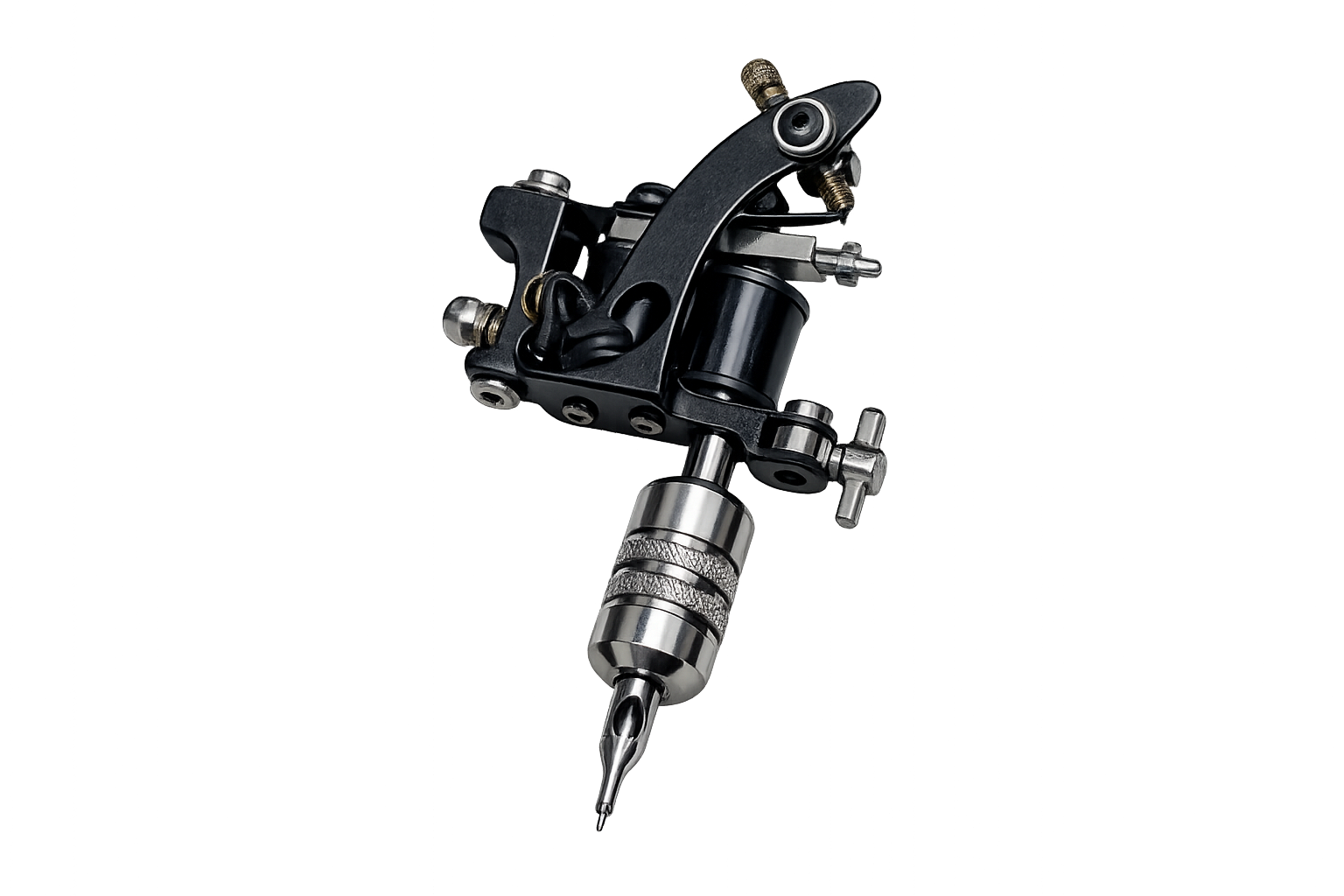
Most modern tattoo machines fall into two major categories: coil machines and rotary machines.
Rotary machines are the most common starting point today. They use a small electric motor to move the needle and are typically quieter, lighter, and easier to set up than coil machines.
Coil machines use electromagnetic coils to drive the needle bar. They are highly customizable but require tuning and setup experience.
When choosing a machine, consider:
- Weight and balance
- Stroke length (commonly 3.5–4.2 mm)
- Compatibility with cartridge needles
- Voltage range
Examples of reliable starter machines include models from Cheyenne, FK Irons, Bishop, and InkJecta.
Needles and Cartridges
Needles deliver ink into the skin and are one of the most important consumable items in tattooing.
Modern setups commonly use cartridge needles. These are sealed units that contain the needle grouping and a membrane that prevents ink from flowing back into the machine.
Common needle groupings include:
- RL (Round Liner) – used for outlines
- RS (Round Shader) – softer shading
- M1 (Magnum) – color packing and shading
- M2 / Curved Mag – smoother shading transitions
Typical beginner setups include:
- 3RL or 5RL for fine lines
- 7RL for medium outlines
- 7M1 or 9M1 for shading and color
Needles must always be sterile and single-use.
Tattoo Ink
Professional tattoo inks are designed to remain stable in the dermis and resist fading. Always use inks from reputable manufacturers that follow safety regulations.
Popular brands include:
- Eternal Ink
- Dynamic Ink
- Intenze
- Kuro Sumi
- Solid Ink
Most artists keep several black inks:
- Line black (thicker)
- Shading black
- Grey wash mixtures
Avoid unknown or unregulated inks. Contaminated pigment can cause infections or allergic reactions.
Transfer Paper and Stencils
Stencil transfer paper allows artists to transfer a design onto skin before tattooing.
Most stencil paper uses a four-layer system:
- Top sheet (where the design is traced)
- Protective sheet
- Carbon layer
- Backing sheet
The design is printed or traced, then applied to skin using stencil transfer solution.
Common stencil products include:
- Spirit Classic Transfer Paper
- ReproFX stencil paper
- Stencil Stuff transfer solution
Stencil Printers
Thermal stencil printers allow artists to print designs directly onto stencil paper.
These printers use heat to transfer the design from regular paper onto the stencil sheet.
Popular models include:
- Brother PocketJet series
- LifeBasis tattoo stencil printer
- ATOMUS thermal stencil printer
Using a printer speeds up preparation and allows precise stencil placement.
Fake Skin for Practice
Practice skins allow beginners to learn needle depth, machine control, and shading techniques before working on real skin.
Better practice skins mimic real skin thickness and resistance.
Common brands include:
- ReelSkin
- A Pound of Flesh
- Skins by Tattoodo
Thin silicone skins can feel unrealistic, so thicker models are generally preferred.
Sanitation and Cleanliness
Sanitation supplies are just as important as machines and needles.
Basic hygiene equipment includes:
- Disposable nitrile gloves
- Medical-grade surface disinfectant
- Barrier film and machine covers
- Green soap solution
- Paper towels and disposable wipes
- Sharps containers for used needles
Cross-contamination is one of the biggest risks in tattooing. Barrier protection and single-use supplies reduce that risk significantly.
Power Supplies and Cables
Machines require a stable power supply to run consistently.
Common components include:
- Power supply unit
- Clip cord or RCA cable
- Foot pedal (for coil machines)
- Wireless battery packs (for modern rotary machines)
Most lining runs between roughly 7–9 volts, while shading often runs slightly lower depending on machine setup.
Where to Buy Equipment
Professional tattoo equipment should be purchased from reputable suppliers.
Buying from established suppliers helps ensure sterile packaging, authentic ink, and reliable machines.
Cheap unknown equipment may save money upfront but often creates problems with consistency, safety, and durability.